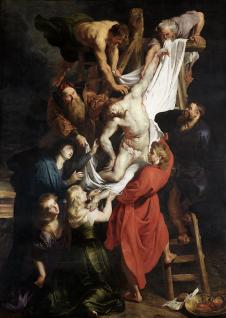
A hushed intensity radiates from the center of Rubens’s *Circumcision Scene*, where a cluster of women gathers around an infant in a moment suspended between reverence and raw physical consequence. Their bodies lean inward, torsos twisted, arms extended—not with tenderness alone, but with solemn purpose—creating a vortex of human presence that pulls the eye irresistibly toward the vulnerable, luminous form of the child. This is not a serene devotional tableau; it is a scene charged with psychological gravity, where faith manifests not as passive contemplation but as embodied ritual, urgent and unflinching.
Rubens orchestrates this emotional density through masterful Baroque composition: diagonal thrusts of drapery, intersecting glances, and tightly interlocked gestures compress space while amplifying narrative tension. The focal point—the infant’s exposed body—is bathed in a soft, almost sacred light, sharply delineated against surrounding shadows that pool like ink in the recesses of the architecture and folds of clothing. This dramatic chiaroscuro, inherited from Caravaggio yet transformed by Rubens’s Flemish sensibility, does more than model form—it heightens spiritual stakes, turning skin into parchment, gesture into prayer, silence into thunder. Brushwork alternates between velvety impasto in the golden brocades and swift, searching strokes along the women’s forearms and necks, lending palpable immediacy to their concentration.
The palette—warm umber grounds, burnished gold accents, and the startling purity of ivory-white linen and infant flesh—evokes both earthly intimacy and liturgical grandeur. These are not idealized saints but women rooted in the tactile world: their sleeves rolled, hair loosely bound, faces lined with quiet resolve rather than ethereal detachment. Their expressions avoid sentimentality; instead, they project a collective gravity—eyes fixed, mouths closed, brows subtly furrowed—suggesting participation in something ancient, binding, and deeply consequential. That restrained intensity makes the work profoundly humanist, even as it serves a biblical subject drawn from Jewish tradition and later absorbed into Christian typology.
As one of Rubens’s rare treatments of circumcision—a theme he approached with theological nuance and compositional daring—the painting stands apart within his oeuvre of mythological exuberance and dynastic portraiture. Here, restraint replaces spectacle; intimacy supplants allegory. Executed in the mature phase of his Antwerp workshop, it reflects his deep engagement with Counter-Reformation ideals: sacramental realism, embodied devotion, and the sanctity of ritual as lived experience. Its enduring power lies not in doctrinal clarity but in its visceral empathy—how light falls on a shoulder, how a hand hovers just above skin, how silence can thrum with anticipation. This is Baroque painting at its most psychologically astute: devout without dogma, dramatic without distortion, timeless because it feels so urgently, tenderly, real.